English
×
Zinc die casting and aluminum die casting are two of the most commonly used manufacturing methods for producing high-precision metal components at scale. While both processes offer excellent repeatability and efficiency, they differ significantly in terms of mechanical strength, weight, tooling lifespan, cost structure, and design flexibility. Understanding these distinctions allows engineers and sourcing professionals to select the most suitable material based on performance requirements and total lifecycle cost rather than just raw material pricing.
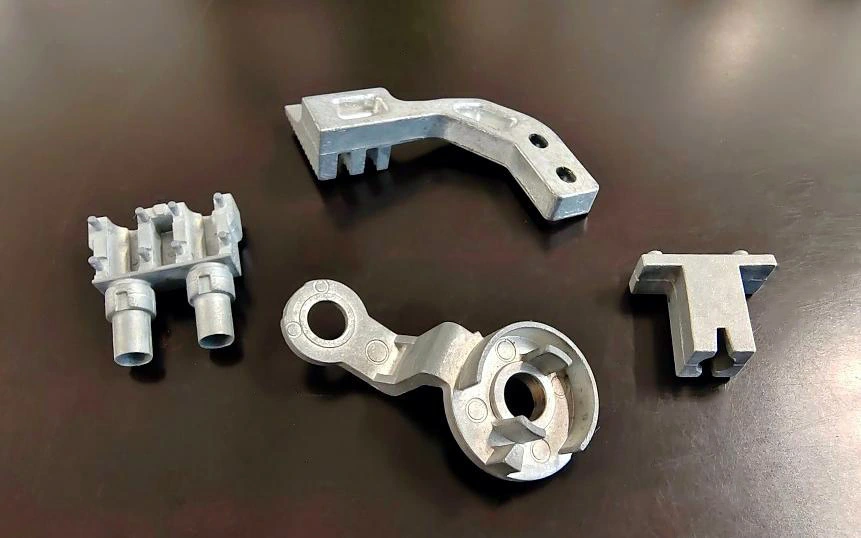
Zinc die casting is typically preferred for smaller, highly detailed components that require tight tolerances and intricate geometries, whereas aluminum die casting is more suitable for larger structural parts where lightweight performance and higher operating temperatures are critical.
One of the most fundamental differences lies in material density. Zinc is significantly denser than aluminum, which means that parts of the same size will be considerably heavier when made from zinc. However, zinc alloys often provide greater strength, toughness, and impact resistance at room temperature. In contrast, aluminum alloys deliver a superior strength-to-weight ratio and maintain their mechanical properties better under elevated temperatures.
Another important distinction is melting temperature. Zinc melts at a much lower temperature than aluminum, which results in shorter production cycles, reduced thermal stress on molds, and longer tool life. As a result, zinc die casting often becomes more cost-effective in high-volume production despite its higher material density and cost per unit weight.
Zinc die castings are known for their high strength and excellent impact resistance, particularly in small to medium-sized components. This makes them well suited for applications that require durability and wear resistance, such as mechanical hardware and precision assemblies. The material’s density and ductility contribute to its ability to absorb shock and resist deformation.
Aluminum die castings, on the other hand, excel in applications where reducing weight is a priority. Their lower density makes them ideal for larger components used in automotive, aerospace, and industrial equipment, where weight reduction directly improves efficiency and performance. Aluminum also retains its mechanical stability better at higher temperatures, making it suitable for parts exposed to heat.
In practical terms, aluminum is commonly used for engine housings, structural supports, and enclosures, while zinc is often selected for smaller components like gears, housings, decorative hardware, and precision mechanisms that benefit from tight tolerances and a solid, high-quality feel.
From a cost perspective, zinc die casting offers several advantages in high-volume production. Its lower melting temperature reduces energy consumption and minimizes thermal wear on tooling, allowing molds to last significantly longer. In many cases, zinc tooling can sustain extremely high production cycles before requiring refurbishment.
Zinc also enables faster production cycles, as the material solidifies quickly and is typically processed in hot-chamber machines designed for high efficiency. Additionally, the process often produces parts with excellent surface quality and dimensional accuracy, reducing the need for secondary machining and finishing.
Aluminum die casting, while generally involving longer cycle times and higher thermal stress on molds, becomes more cost-effective for larger components where weight savings are critical. It is particularly advantageous when reducing material mass leads to performance benefits, such as in transportation applications.
Zinc die casting is well known for its ability to achieve very smooth surface finishes and extremely tight tolerances directly from the mold. This allows manufacturers to produce complex, detailed components with minimal post-processing. Fine features such as textures, engravings, and functional details can be formed during casting, making zinc ideal for both functional and aesthetic applications.
Aluminum die casting also supports a wide range of surface treatments, including coating and finishing processes, but typically requires more attention to achieve the same level of surface smoothness and fine detail as zinc. In terms of dimensional accuracy, aluminum can deliver precise results, although achieving ultra-tight tolerances may require additional machining or process control.
Zinc’s high fluidity supports intricate designs with thin walls and integrated features, while aluminum offers greater flexibility for larger parts that require structural reinforcement, internal channels, or heat dissipation features. Each material provides distinct design advantages depending on part size and functional requirements.
When comparing the two processes overall, zinc stands out for its superior precision, smoother as-cast surface finish, longer tooling life, and ability to produce thin-walled, highly detailed components. Aluminum, by contrast, offers lower density, making it ideal for lightweight structures, and performs better in high-temperature environments.
Zinc is generally preferred for small to medium-sized components requiring high accuracy and durability, while aluminum is better suited for larger parts where reducing weight and maintaining performance under heat are key considerations.
| Factor | Zinc Die Casting | Aluminum Die Casting |
|---|---|---|
| Density | ≈ 5.0 g/cm³ (heavier) | ≈ 2.7 g/cm³ (lighter) |
| Typical yield strength | ≥ 280 MPa for common zinc alloys | Lower density but strong; excellent strength-to-weight ratio |
| Impact resistance | Very high impact toughness, good for small structural parts | Good, but generally less impact-tough than zinc at room temperature |
| Operating temperature range | Best at room to moderate temperatures | Better property retention at higher temperatures |
| Melting point | ≈ 380–420 °C (low) | ≈ 660 °C (high) |
| Tool life | Can exceed 1,000,000 shots in optimized conditions | Shorter than zinc due to higher thermal stress |
| Cycle time | Very fast; ideal for high-volume production | Longer cycles; better for larger parts |
| Surface finish | Exceptionally smooth as-cast (≈ Ra 1.6 µm) | Smooth but typically slightly rougher than zinc as-cast |
| Achievable tolerances | Very tight, around ±0.03 mm on small features | Tight, but generally less precise than zinc at the smallest scales |
| Part size sweet spot | Small to medium, intricate components | Medium to large structural parts |
| Strength-to-weight ratio | High strength; weight penalty due to density | Excellent strength-to-weight, ideal for lightweight designs |
| Typical applications | Locks, hinges, electronics, gears, decorative hardware | Automotive housings, brackets, enclosures, structural frames |
Selecting between zinc and aluminum die casting should be based on a combination of factors including part size, strength requirements, weight targets, operating conditions, and production volume. Zinc is often the better option when a design requires intricate geometry, tight tolerances, and high production volumes with minimal secondary processing.
Aluminum becomes the preferred choice when weight reduction is critical, when components are larger in size, or when the application involves higher operating temperatures. In many cases, the decision is not straightforward and requires balancing multiple engineering and economic considerations.
A practical approach is to consider zinc as the optimal solution for compact, high-precision components produced in large quantities, while aluminum is better suited for lightweight structural applications. Selecting the right die casting material based on performance and production needs helps ensure long-term efficiency and reliability. Eesson supports this decision-making process by analyzing design data, production requirements, and cost factors to recommend the most effective material for each project.
Zinc and aluminum die casting each offer distinct advantages that make them suitable for different types of applications. Zinc excels in precision, surface quality, durability, and tooling longevity, while aluminum provides clear benefits in lightweight design and high-temperature performance. Choosing the right material requires a comprehensive evaluation of design requirements, operating conditions, and production scale. By working with Eesson, manufacturers can access expert guidance, detailed engineering analysis, and reliable production capabilities to ensure the best possible outcome for their specific application.

Room J757, No. 5358, Huyi Rd, Jiading, Shanghai, China
Room J757, No. 5358, Huyi Rd, Jiading, Shanghai, China