English
×
High pressure zinc die casting is widely recognized as an efficient manufacturing method for producing large volumes of highly accurate metal components with excellent mechanical performance and tight tolerances. For engineers, procurement professionals, and product developers, understanding this process is essential for balancing cost, performance, and production timelines. As a dedicated manufacturing partner, Eesson provides high pressure zinc die casting solutions that integrate engineering expertise, consistent quality control, and cost-effective production. This approach supports customers from initial
concept development through to full-scale manufacturing with confidence and efficiency.
High pressure zinc die casting is a manufacturing process where molten zinc alloy is injected into a hardened steel mold under high pressure to form detailed and repeatable components. In a typical hot-chamber system used for zinc alloys, the molten metal is forced into a sealed die cavity through a plunger mechanism. This allows the material to rapidly fill thin walls and complex geometries before solidifying against the cooled mold surfaces.
Once the metal solidifies, the die opens and ejector pins release the casting. Excess material such as runners, gates, and flash is then removed in subsequent trimming operations. Compared to gravity or low-pressure casting methods, this process delivers significantly shorter cycle times, often measured in seconds, making it highly suitable for medium to high-volume production programs.
One of the primary advantages of high pressure zinc die casting is its ability to produce intricate, dimensionally stable components with strong mechanical properties at scale and competitive cost. Zinc alloys have a relatively low melting point and high fluidity, allowing for the creation of thin walls and fine features that are difficult to achieve with other metal forming techniques.
Rapid solidification within steel molds enhances both strength and surface quality, often minimizing the need for additional machining. From a production standpoint, manufacturers benefit from fast cycle times, extended tooling life compared to aluminum processes, and the recyclability of zinc materials. These factors contribute to lower overall production costs and support sustainability initiatives.
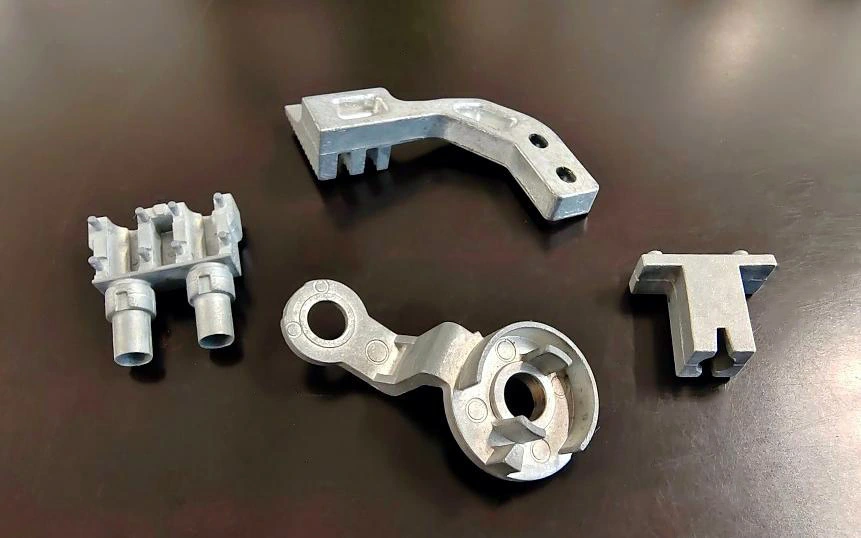
High pressure zinc die casting is commonly used to produce small to medium-sized components where precision, durability, and surface finish are critical. In the automotive sector, it is applied to parts such as brackets, housings, trim components, and locking mechanisms that require strength and consistency. In electronics and electrical applications, it is used for connector housings, enclosures, switches, and thermal management components due to zinc’s conductivity and stability.
Consumer and industrial products also benefit from this process, including handles, hinges, gears, and power tool housings where both aesthetics and functionality are important. These pressure die casting products combine precision with durability. In construction and hardware applications, zinc die cast components are used in fittings and structural elements that must withstand long-term mechanical and environmental stress.
The global die casting market was valued at approximately 93 to 101 billion USD in 2025 and is expected to grow significantly in the coming years, driven by increased demand across automotive, electronics, and industrial sectors.
The high pressure zinc die casting process follows a repeated cycle in which a steel mold is filled, cooled, and opened to produce consistent parts. The process begins with die preparation, where the mold is cleaned, lubricated, and securely clamped to ensure proper sealing and prevent flash formation.
Molten zinc alloy is then injected into the die cavity at high speed and pressure, ensuring that even complex geometries are completely filled. The material rapidly cools and solidifies within the mold, forming a dense structure with strong mechanical properties. After solidification, the mold opens and the part is ejected, typically into automated handling systems.
Secondary operations follow, including trimming excess material and performing finishing processes such as machining, deburring, or surface treatment. Cycle times can range from just a few seconds to under a minute depending on part complexity, enabling high-volume production when machines operate continuously.
Tooling for this process consists of precision-engineered steel molds along with gating, runner, and ejection systems designed to maintain consistent part quality over extended production runs. Compared to aluminum die casting, zinc tooling generally has a longer service life due to the lower melting temperature and reduced thermal stress on the mold.
Well-designed tooling can often support hundreds of thousands to over a million cycles before requiring significant refurbishment. Critical design factors include parting line configuration, draft angles, gating design, venting, cooling channel layout, and ejection systems. These elements directly influence production efficiency, defect rates, and surface quality.
At Eesson, tooling development begins at the design-for-manufacturability stage, where engineers optimize geometry, wall thickness, and structural features to enhance tool longevity and simplify production.
Quality control in high pressure zinc die casting involves both preventive and inspection-based measures to ensure each component meets strict dimensional and mechanical standards. Advanced manufacturing facilities monitor key process parameters such as temperature, injection speed, and pressure to maintain consistency and reduce defects.
Dimensional accuracy is verified using coordinate measuring machines, gauges, and optical inspection systems, while internal integrity may be assessed through X-ray or CT scanning for critical applications. Material properties are maintained through controlled alloy composition and periodic mechanical testing, including tensile and hardness evaluations.
Eesson applies comprehensive quality control procedures, including incoming material inspection, real-time process monitoring, and final product validation, ensuring stable production quality and minimizing the risk of defects or rework.
High pressure zinc die casting is a strong alternative to aluminum casting, CNC machining, and plastic injection molding for small to medium-sized components requiring precision and durability. It offers superior dimensional accuracy with minimal post-processing compared to aluminum casting, while also enabling thinner wall sections.
Compared to machining, zinc die casting is far more efficient at high volumes, where machining costs and cycle times become limiting factors. While plastic injection molding can achieve high production rates, it lacks the mechanical strength and rigidity of metal components. Zinc also provides excellent surface finish and is fully recyclable, making it both functional and environmentally advantageous.
| Attribute | Zinc High Pressure Die Casting | Aluminum Die Casting | Machining from Solid | Plastic Injection Molding |
|---|---|---|---|---|
| Typical part size | Small–medium components; high feature density | Medium–large structural components | Flexible but costlier as volume increases | Small–large, limited by mechanical strength |
| Dimensional accuracy | Very high, minimal machining in many cases | High, often needs more machining for precision fits | Very high, driven by CNC capability | High for non‑metallic parts |
| Mechanical strength | High strength and hardness, good impact resistance | High specific strength, lighter components | Highest, depends on base material | Moderate, depends on polymer and fillers |
| Wall thickness | Very thin walls possible (≈0.3–0.5 mm for small parts) | Thin but typically thicker than zinc equivalents | Limited by machining stability | Thin walls common but lower stiffness |
| Tooling life | Long due to low melting temperature of zinc | Shorter due to higher thermal load on die | No casting die; cutting tools wear instead | Very long mold life for many plastics |
| Economics at high volume | Excellent; very high production rates | Excellent for medium–high volumes | Poor at high volume due to cycle time | Excellent for high volumes |
| Surface finish | Smooth as‑cast, ideal for plating and painting | Good, sometimes needs additional finishing | Excellent but machining marks visible without finishing | Good cosmetic surfaces achievable |
| Recyclability | Fully recyclable metal, low melting energy | Fully recyclable, widely recycled in industry | Material‑dependent, metals recyclable | Recyclability depends on polymer type |
Selecting the right supplier involves evaluating more than just pricing. Technical capability, engineering support, quality systems, and long-term reliability all play a critical role. A capable supplier should provide design-for-manufacturability support, helping optimize part geometry and reduce risks such as porosity or distortion.
Tooling expertise is equally important, as in-house capabilities or well-managed tooling resources can significantly shorten lead times and improve consistency. Certifications such as ISO 9001 and IATF 16949 indicate adherence to structured quality systems, particularly for automotive applications.
Production capacity, automation level, and supply chain resilience should also be assessed to ensure the supplier can meet demand and handle potential disruptions. Eesson offers comprehensive support across design, tooling, production, and finishing, making it a reliable partner for end-to-end zinc die casting solutions.
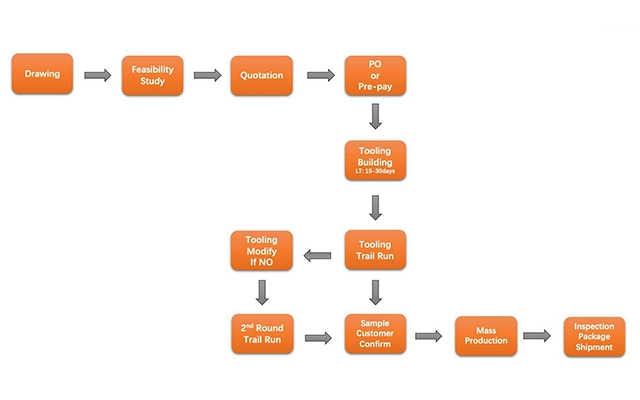
Working with a specialized partner like Eesson allows companies to streamline their manufacturing processes by combining engineering expertise, advanced tooling, and scalable production within a single supply chain. Eesson provides comprehensive services ranging from initial design consultation and tooling development to mass production and surface finishing, ensuring consistency and efficiency throughout the product lifecycle.
High pressure zinc die casting combines precision, strength, surface quality, and production efficiency, making it an ideal solution for modern industries such as automotive, electronics, and consumer products. When supported by advanced tooling, strict quality control, and experienced engineering, it can significantly reduce overall production costs and accelerate time-to-market. By partnering with Eesson, manufacturers gain access to integrated engineering support, durable tooling solutions, and reliable high-volume production. This ensures that each project achieves both technical performance and supply chain stability, from initial concept through to final delivery.

Room J757, No. 5358, Huyi Rd, Jiading, Shanghai, China
Room J757, No. 5358, Huyi Rd, Jiading, Shanghai, China