English
 Small and Complex Parts
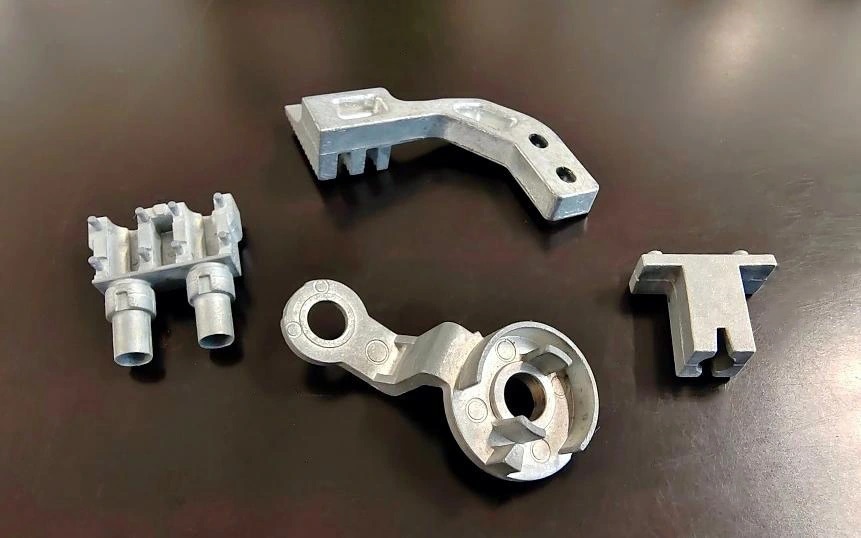
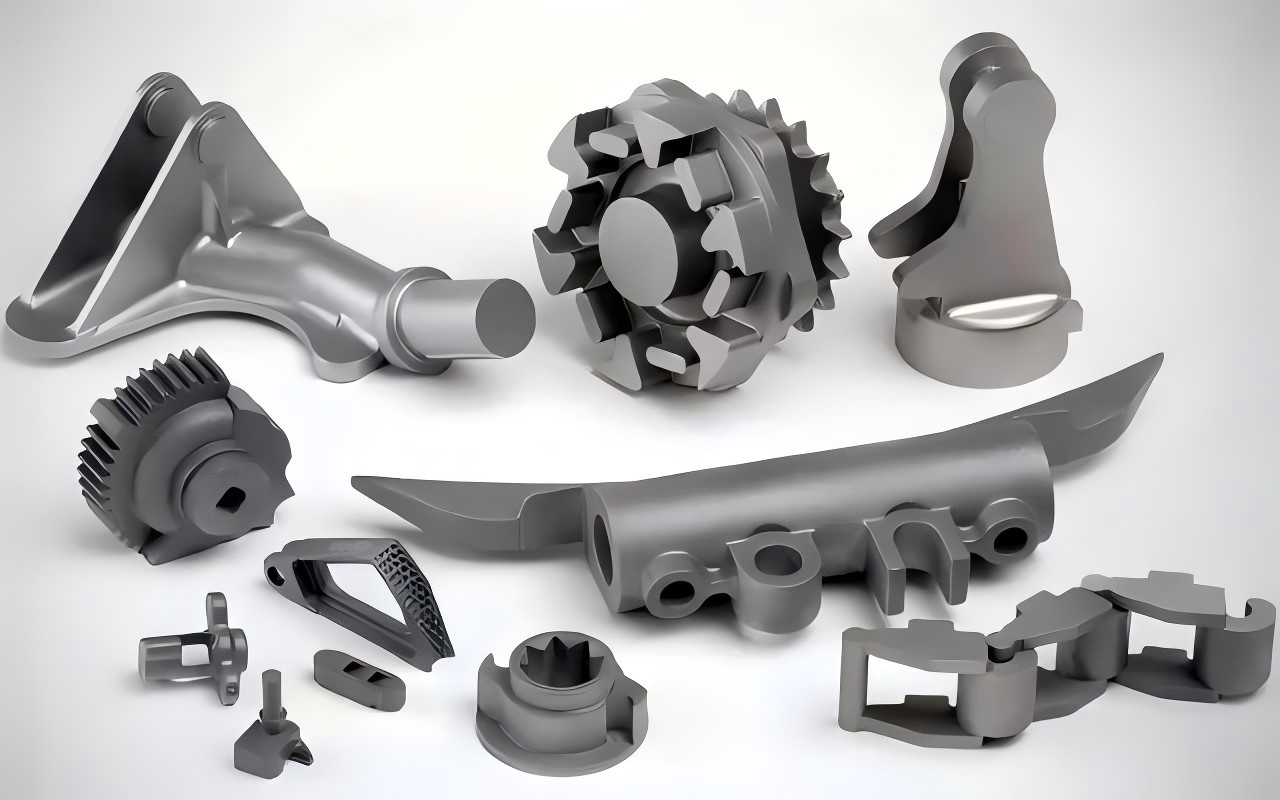
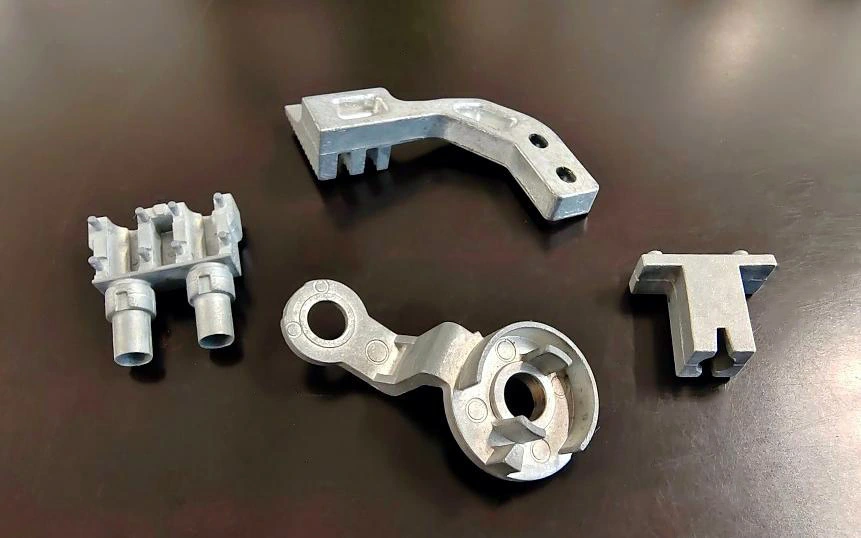
Parts with ribs, bosses, slots, side holes, mounting points, internal cavities and integrated functional features can be evaluated for conventional or multi-slide casting.
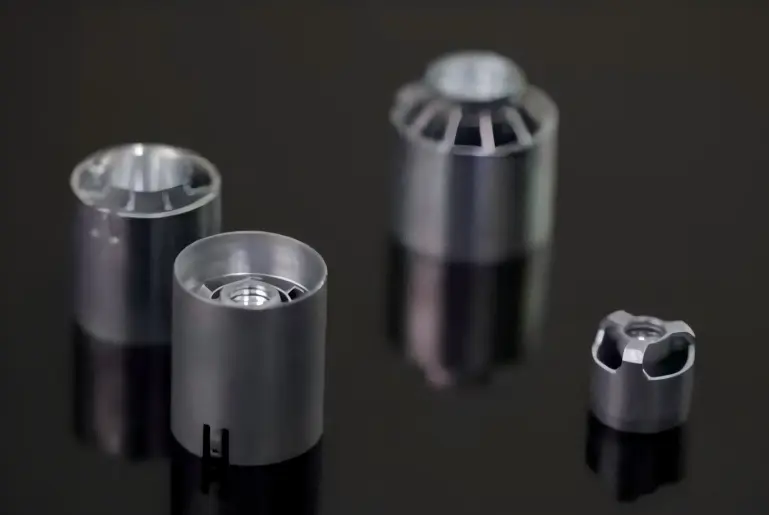
Eesson manufactures custom zinc die cast parts according to customer drawings, application requirements and production-volume targets. The following values are preliminary planning references. Final feasibility is confirmed after DFM and drawing review.
Parts with ribs, bosses, slots, side holes, mounting points, internal cavities and integrated functional features can be evaluated for conventional or multi-slide casting.
A typical wall range of approximately 0.8–3.0 mm is practical for many zinc alloy parts. Local thinner areas depend on alloy flow, part area, gate location and structural support.
Smaller as-cast features may begin around ±0.05–0.10 mm. Larger or cross-parting-line dimensions normally need wider tolerance or secondary CNC machining.
| Capability | Typical Planning Range | Project Consideration |
|---|---|---|
| Main Alloys | Zamak 3, Zamak 5 and project-approved zinc alloys | Selection depends on strength, hardness, ductility, finishing and assembly. |
| Typical Part Weight | From a few grams to approximately 3 kg | Machine capacity, projected area and geometry must be reviewed. |
| Typical Maximum Size | Up to approximately 300 mm | Large, thin or irregular parts require specific filling and distortion review. |
| Typical Wall Thickness | Approximately 0.8–3.0 mm | Uniform sections and gradual transitions are preferred. |
| As-Cast Tolerance | From approximately ±0.05–0.10 mm on small features | Actual tolerance increases with size, geometry and feature location. |
| Production Stage | T1 samples, pilot runs and repeat-volume production | Economics improve when tooling is used for recurring orders. |
| Secondary Operations | CNC, tapping, deburring, polishing, plating, painting and assembly | Processes are selected from the approved drawing and finish standard. |
Zinc die casting is generally more economical for recurring production than for one-off parts. Projects beginning from several thousand parts per year may be suitable, but part size, cavity quantity and finishing requirements also affect the commercial threshold.
Eesson can support the main stages required to move a drawing from feasibility review into tooling, sample approval and repeat production.
Review alloy, wall thickness, draft, parting line, gates, overflows, undercuts, machining allowance, finish areas and critical dimensions.
Custom project support →Develop cavity, runner, slide, core, ejection and cooling arrangements according to part structure, production volume and expected maintenance needs.
View tooling service →Conventional hot-chamber production supports repeatable filling and efficient production for many small and medium-sized Zamak components.
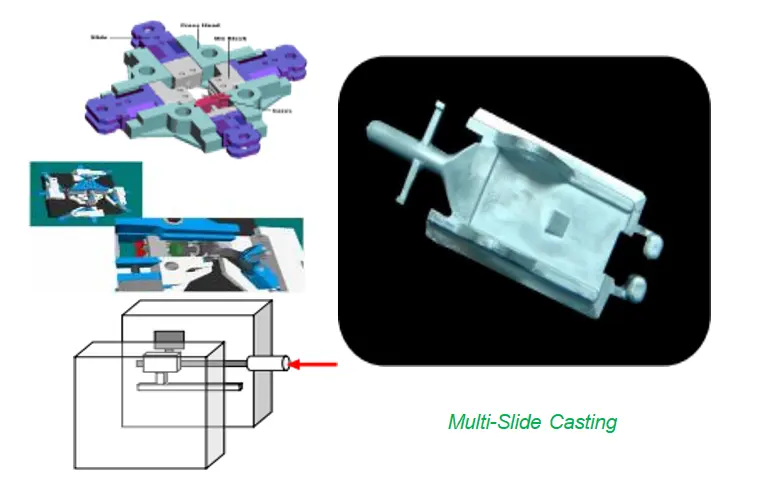
See the casting process →Multiple independently moving slides may form small parts with side features and complex geometry while reducing selected secondary operations.
Explore multi-slide casting →Milling, drilling, tapping, reaming, deburring, polishing, plating, painting and coating can be coordinated according to the approved drawing.
View equipment capability →Dimensional, appearance, coating and functional checks can be combined with inserts, fasteners, springs, pins, bushings or simple subassembly.
Review quality control →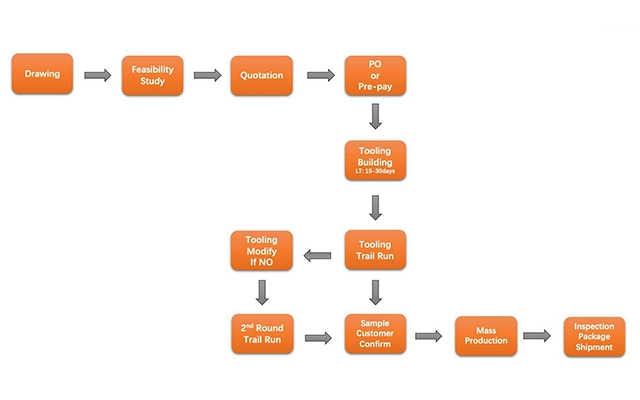
A preliminary DFM response can often be prepared within approximately one to three working days after complete project information is received. Tooling commonly requires approximately four to eight weeks, followed by trial production and T1 sample inspection.
Eesson primarily uses Zamak alloys for precision zinc casting. Zamak 3 and Zamak 5 should be selected according to the required balance of strength, hardness, ductility, finishing, wear and assembly performance.
Zamak 3 provides balanced casting performance, dimensional stability, surface quality and plating response. It is normally the first alloy considered when the project does not require the additional strength or hardness of Zamak 5.
Zamak 5 generally offers greater strength and hardness because of its higher copper content. It may be evaluated for locking, lever, hinge, wear-contact and mechanically loaded components.
Zamak 5 may have lower ductility than Zamak 3. Parts that require bending, staking or significant post-casting deformation should be reviewed before final alloy selection.
| Selection Factor | Zamak 3 | Zamak 5 |
|---|---|---|
| General Use | Broad general-purpose alloy | Applications needing higher strength or hardness |
| Strength and Hardness | Moderate and well balanced | Generally higher |
| Ductility | Generally better | Generally lower |
| Dimensional Stability | Very good | Very good |
| Plating and Finishing | Very good | Very good |
| Common Parts | Housings, connectors and decorative parts | Locks, levers, hinges and loaded hardware |
When evaluating zinc die casting, consider component geometry, required finish, mechanical requirements and expected production volume together. The table below connects common purchasing requirements with process characteristics to discuss during drawing review.
| Buyer Requirement | Relevant Zinc Die Casting Benefit |
|---|---|
| Complex component geometry | Good fluidity supports detailed shapes, ribs, bosses, thin sections and integrated features. |
| Stable repeat production | Steel tooling supports consistent recurring orders after process approval. |
| Reduced secondary work | Many functional features can be formed directly in the casting tool. |
| Decorative appearance | Zinc surfaces can be polished, plated, painted or coated after suitable preparation. |
| Mechanical performance | Zamak alloys provide useful rigidity, strength, hardness and dimensional stability. |
| High-volume economics | Short production cycles can reduce unit cost as repeat volume increases. |
| Tool service planning | Lower processing temperature can support long tool service with appropriate design and maintenance. |
Zinc is not automatically the best material for every part. Very large low-volume components, extremely high-temperature applications or projects where minimum weight is the primary objective may require another process or alloy.
Zinc die casting is used for components that need detailed geometry, stable dimensions, durable surfaces and repeat manufacturing. Actual material, finish and inspection requirements should be defined by the part application.

Smart-key housings, lock components, connector housings, sensor housings, brackets and shielding or mounting structures.
Electronic housings, connector shells, ports, hinges, shielding components, mounting brackets and control parts.
Lock cylinders, lock bodies, handles, hinges, latches, levers, fasteners and decorative functional hardware.
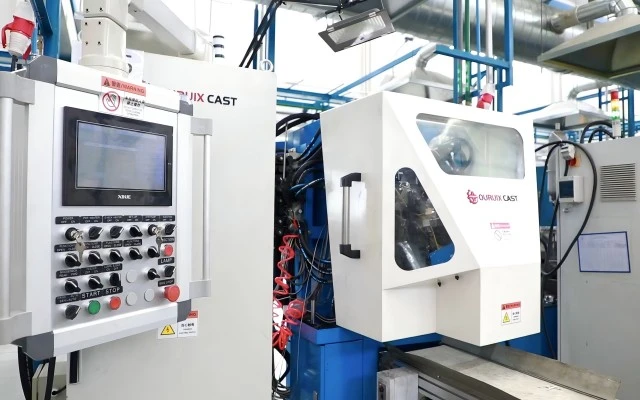
Equipment housings, switches, circuit-breaker parts, brackets, mechanical linkages, instrument parts and control-system components.
Quality assurance begins with drawing, alloy and process planning and continues through tooling, die casting, secondary operations and final delivery.
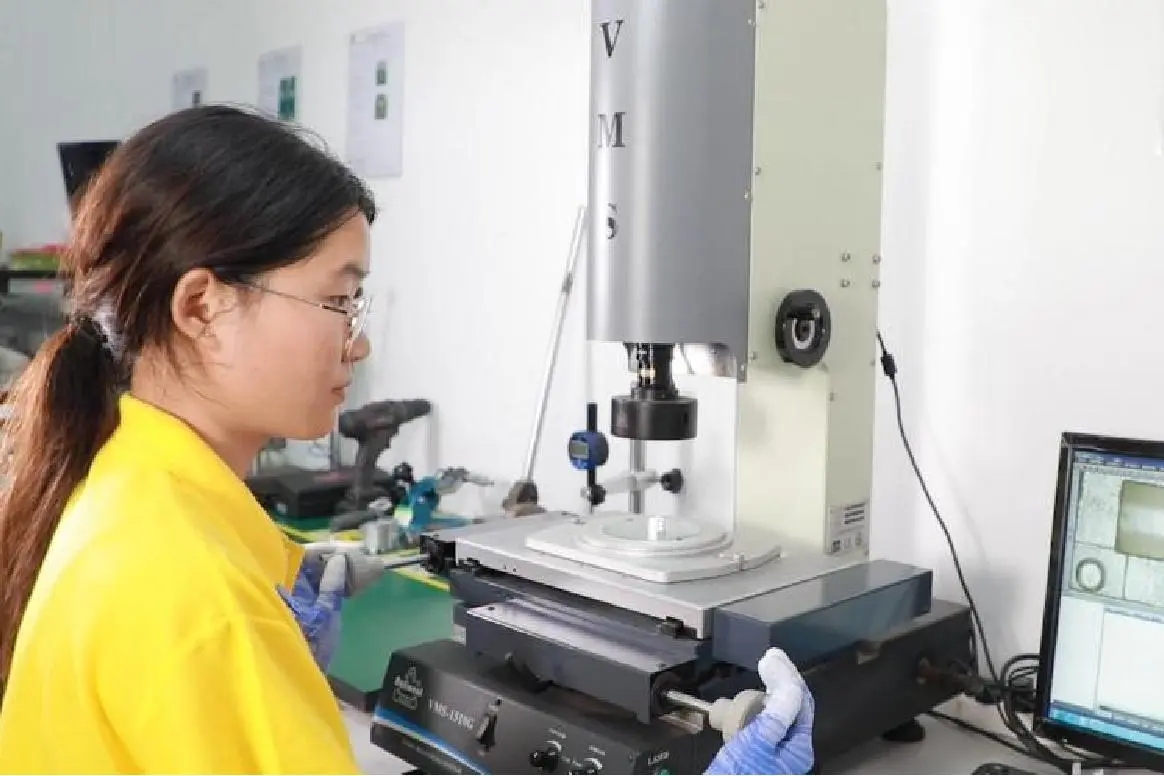
The inspection plan should match the component function rather than apply every available test to every order. Drawing tolerances, finish requirements, assembly interfaces and application risks determine the necessary inspection methods and reports.
Calipers, micrometers, gauges, optical equipment, checking fixtures and three-dimensional measurement may be selected according to feature type and tolerance.
Appearance, coating thickness, adhesion, gloss or color and salt-spray requirements should be defined before quotation.
Hardness, torque, pressure, assembly fit or other functional checks can be included where relevant to the product.
Bulk protective packing, separated layers, trays, individual bags, export cartons or heavier-duty cases can be selected according to finish and transport risk.
The strongest purchasing case comes from actual project support, disclosed equipment, inspection resources and a clear route from drawing review to production delivery.
Drawing review, tooling, casting, CNC machining, finishing, inspection and simple assembly can be coordinated under one project route.
Conventional hot-chamber and multi-slide options allow the production route to be selected according to part size, side features, structure and annual volume.
The website lists dimensional, coating, salt-spray, hardness, torque, pressure and material-related inspection resources for project-specific quality plans.
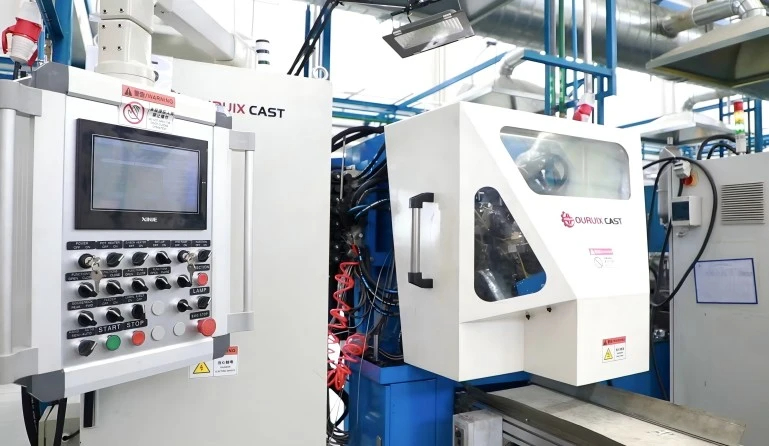
Multiple RapidCast machine models are listed for small complex parts.
Zinc alloy die-casting machine capacities published on the equipment page.
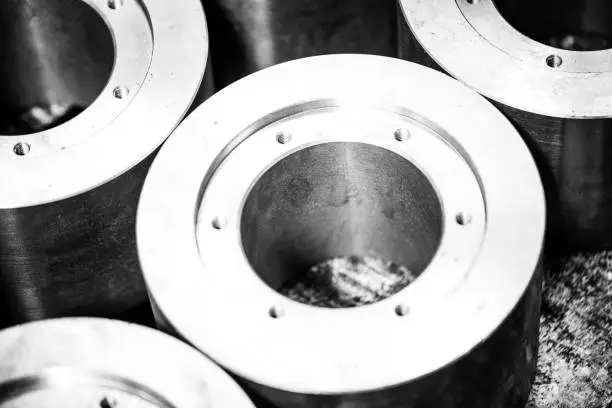
Turning and machining equipment for selected precision secondary features.
Optical, 3D, coating, hardness, salt-spray, torque and pressure-related checks.

The cost and production stability of a zinc die cast part depend on more than its weight. Wall thickness, side features, undercuts, parting lines, critical tolerances and surface requirements all affect tooling complexity, machining content and inspection needs. Reviewing these factors before tooling can reduce unnecessary secondary operations and later design changes.
Slides, cores, deep cavities and difficult release directions may increase tooling cost. Practical draft, gradual wall transitions and clearly defined visible surfaces help simplify production planning.
Precision bores, threads and sealing surfaces may require CNC machining. Plating, painting and decorative finishes should also be identified before quotation because they affect surface preparation, inspection and packaging.

Room J757, No. 5358, Huyi Rd, Jiading, Shanghai, China
Room J757, No. 5358, Huyi Rd, Jiading, Shanghai, China