English
×
Zinc die casting provides a powerful combination of accuracy, strength, thin-wall capability, and cost efficiency, making it an excellent choice for manufacturing complex components used in industries such as automotive, electronics, hardware, and consumer goods. As an experienced manufacturing partner, Eesson supports engineers and sourcing teams in transforming demanding design concepts into scalable, high-quality zinc components suitable for mass production.
Zinc die casting is a high-pressure process in which molten zinc alloy is injected into precision steel molds to create complex components that are close to final shape with tight tolerances. Due to the excellent fluidity and low shrinkage of zinc alloys, the material can accurately fill intricate cavities and reproduce fine features such as threads, logos, undercuts, and micro-level geometries that would be difficult or expensive to achieve through machining.
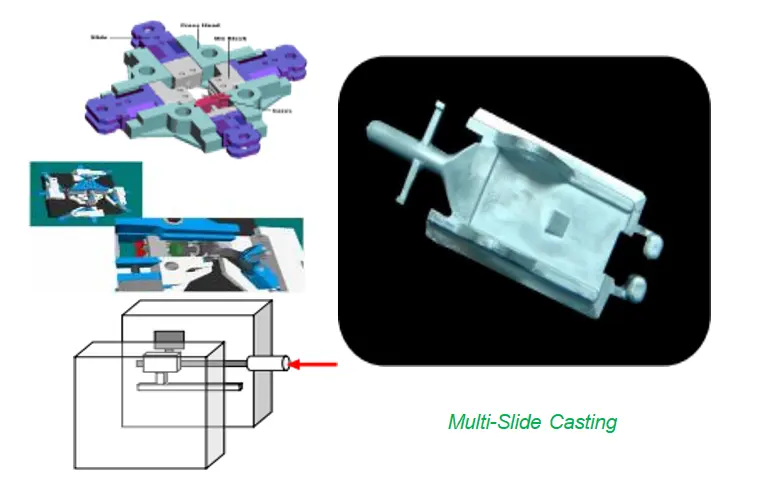
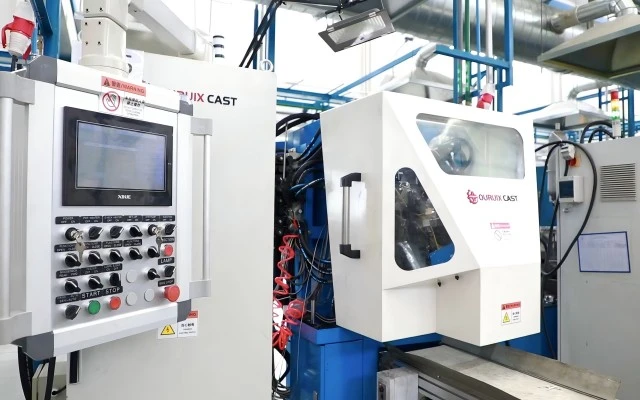
This capability makes zinc die casting ideal for parts such as connectors, gears, locks, hinges, electronic housings, decorative hardware, and detailed automotive mechanisms that require consistent fit and performance. Compared with alternative manufacturing methods like CNC machining, stamping with secondary forming, or plastic molding, zinc die casting often enables multiple components to be integrated into a single part. This reduces assembly steps, eliminates potential failure points such as joints or welds, and improves overall product reliability. Eesson utilizes advanced tooling designs and automated hot-chamber systems, including multi slide die casting for complex components, to ensure repeatable production across large volumes, supporting customers targeting global-scale manufacturing.
Dimensional accuracy in zinc die casting refers to the ability to consistently maintain tight tolerances across large production runs, while surface finish reflects the smoothness and detail achieved directly from the mold. Zinc alloys naturally exhibit low solidification shrinkage and excellent flow characteristics, allowing manufacturers to achieve very precise tolerances for small to medium-sized components.
In addition to accuracy, zinc die casting produces smooth surfaces that often require little or no additional finishing. Fine details such as text, patterns, or functional textures can be formed directly during casting, making the process highly suitable for both functional and decorative parts. Zinc components are also compatible with a wide range of surface treatments, including plating, coating, and painting, allowing manufacturers to meet both aesthetic and corrosion resistance requirements efficiently. These advantages make zinc die casting particularly valuable in sectors such as electronics, telecommunications, and premium hardware products.
The economic advantages of zinc die casting stem from its fast production cycles, long-lasting tooling, minimal material waste, and reduced need for secondary processing. Zinc’s relatively low melting temperature allows for shorter cycle times and less thermal stress on molds, which significantly extends tooling life compared to higher-temperature casting materials.
Because zinc die cast parts typically emerge with excellent dimensional accuracy and surface quality, the need for additional machining or finishing is often minimal. This reduces labor requirements and shortens production timelines. Although initial tooling investment can be significant, the process becomes highly cost-effective at medium to high production volumes, where tooling costs are distributed across a large number of parts. For companies planning high-volume production, Eesson can provide detailed cost analysis and process comparisons to determine the most efficient manufacturing strategy.
Zinc die casting is particularly well suited for producing thin-walled components while maintaining structural integrity and detail. The high fluidity of zinc alloys allows molten material to flow into narrow and complex mold sections, ensuring complete filling of fine features such as ribs, bosses, and internal structures.
This capability enables the production of lightweight yet strong components with reduced material usage. It is especially beneficial for compact designs found in electronics, automotive interiors, and densely integrated assemblies. Additionally, engineers can incorporate multiple functional features directly into a single casting, such as reinforcement structures or mounting elements, reducing part count and simplifying assembly. Eesson supports this process through simulation and design-for-manufacturability analysis, helping optimize wall thickness and feature design while ensuring reliable production outcomes.
Zinc die cast components are known for their durability, offering strong resistance to wear, impact, and fatigue under real-world operating conditions. Zinc alloys provide high toughness and are well suited for applications involving repeated motion, friction, or mechanical stress, such as hinges, locks, brackets, and safety components.
In addition to mechanical durability, zinc also offers natural corrosion resistance, which can be further enhanced through surface treatments like plating or coating. This ensures long-term performance in various environments, including those with moisture or mild exposure to corrosive elements. The ability to maintain dimensional stability over time further enhances reliability, reducing maintenance needs and lowering total lifecycle costs. Eesson can recommend appropriate alloy selections and finishing options based on the specific environmental and performance requirements of each application.
Zinc die casting offers strong mechanical performance, including high tensile strength, yield strength, and impact resistance. Zinc alloys are capable of withstanding significant loads without deformation or failure, making them suitable for both structural and semi-structural applications.
In comparison to other die-cast metals, zinc generally provides greater toughness and ductility at room temperature, allowing components to absorb stress and resist cracking. This makes it an excellent choice for compact parts that must handle mechanical loads, such as gears, latches, and housing components. Eesson works closely with customers to optimize alloy selection and part geometry, ensuring the right balance between strength, weight, and cost for each project.
Beyond strength and durability, zinc die casting offers a range of performance benefits that enhance overall product functionality. Zinc alloys provide good thermal and electrical conductivity, making them suitable for components involved in heat dissipation or electrical applications. They also have strong vibration damping characteristics, which can help reduce noise and improve system stability.
Dimensional stability is another key advantage, ensuring that parts maintain precise fits and alignment over time, which is essential for mechanisms with moving components. Additionally, zinc is highly recyclable and can be reused without significant degradation in properties, supporting environmentally sustainable manufacturing practices. Its lower melting temperature also contributes to reduced energy consumption during production, further improving its environmental profile.
When compared with other manufacturing processes, zinc die casting stands out for its ability to combine precision, strength, and efficiency. It offers tighter tolerances and better surface finish than aluminum die casting in many cases, while also enabling thinner wall sections. Compared to CNC machining, it is far more cost-effective for large production runs, where machining time and material waste become limiting factors.
| Aspect | Zinc Die Casting | Aluminum Die Casting | CNC Machining (Metal) | Plastic Injection Molding |
|---|---|---|---|---|
| Typical tolerances | ≈ ±0.03 mm for small parts | Looser than zinc at similar size | Very tight, but high machining time | Good, but more shrinkage and warpage |
| Minimum wall thickness | ≈ 0.3–0.5 mm | ≈ 2.0–2.3 mm | Limited by tooling rigidity, not melt flow | ≈ 0.5–1.0 mm typical |
| Mechanical strength | High strength and toughness | Good strength, lower impact resistance | Highest, depending on alloy and design | Much lower strength, time-dependent creep |
| Surface finish out of tool | Very smooth, Ra ≈ 1.6 µm | Smooth, often more finishing required | Excellent, but requires cutting passes | Good cosmetic finish possible |
| Tool life | Often hundreds of thousands to millions of cycles | Lower due to higher melt temperature | Tool wear tied to cutting, not cycles | High, but resin can degrade molds over time |
| Best volume range | ≈ 10,000+ pieces recommended | ≈ 10,000+ pieces | Low to medium volumes; prototypes | Medium to very high volumes |
| Part consolidation potential | Excellent (integrated features, threads, logos) | Good, similar to zinc | Moderate; complexity increases machining time | Good for non-structural features |
Plastic injection molding can achieve high production rates but lacks the strength and durability of metal components, making zinc a better choice for load-bearing or wear-resistant applications. Zinc die casting also benefits from long tooling life and strong part integration capabilities, allowing complex designs to be produced efficiently and consistently.
Zinc die casting is widely used in automotive applications such as interior mechanisms, brackets, and functional components that require high precision and durability. It is also common in consumer hardware products like handles, hinges, and locks, where both strength and appearance are important.
In electronics and telecommunications, zinc is used for enclosures, connector housings, and shielding components that require accurate dimensions and good thermal or electromagnetic performance. With continued growth in global manufacturing demand, zinc die casting remains a key process for producing high-quality components across multiple industries. Eesson supports these applications by providing tailored solutions in tooling design, material selection, and finishing processes.
A skilled manufacturing partner plays a critical role in translating the theoretical advantages of zinc die casting into real production benefits. Eesson applies deep expertise in tooling design, gating systems, cooling strategies, and alloy selection to optimize each project based on its specific requirements.
Early involvement in design-for-manufacturability helps identify potential issues and refine part geometry before production begins, reducing the risk of defects and minimizing development time. In addition to casting, Eesson offers secondary operations such as precision machining, surface finishing, and assembly, delivering fully finished components ready for use. This integrated approach simplifies supply chains and ensures consistent quality from prototype to mass production.
Zinc die casting delivers a well-balanced combination of precision, strength, surface quality, and cost efficiency, making it an ideal solution for high-volume production of complex components. Its ability to support thin walls, intricate geometries, and durable performance makes it particularly valuable in demanding industries. For companies developing precision components at scale, working with Eesson provides access to advanced engineering support, optimized tooling, and reliable production capabilities. By aligning process strengths with product requirements, zinc die casting can significantly reduce costs, improve product quality, and accelerate time to market.

Room J757, No. 5358, Huyi Rd, Jiading, Shanghai, China
Room J757, No. 5358, Huyi Rd, Jiading, Shanghai, China